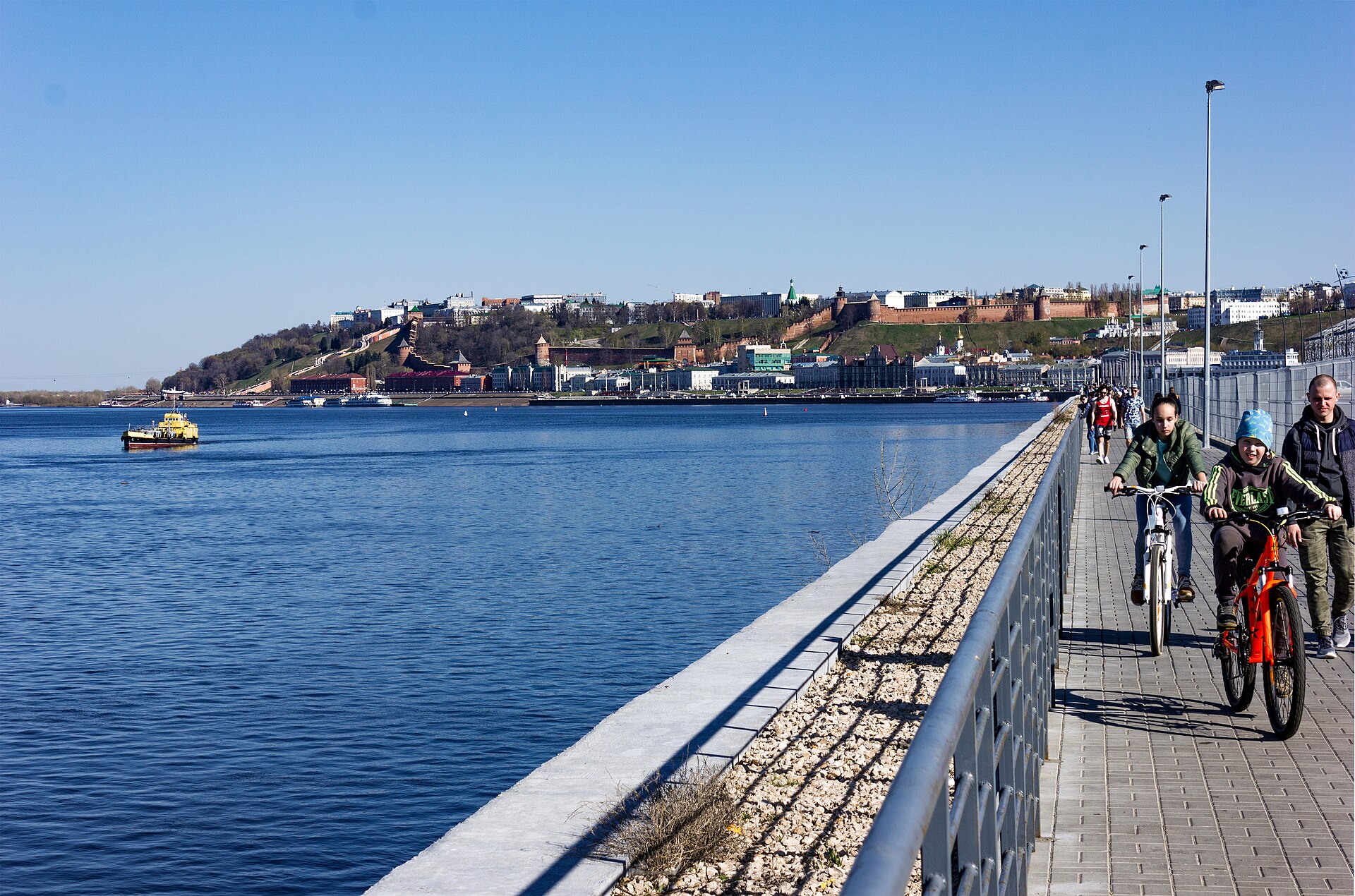
Nizhny Novgorod was founded in 1221 by Prince Yuri Vsevolodovich of Vladimir. Its position above the meeting of the Volga and Oka gave the settlement strategic importance. Over time, that same geography would help make it one of the major commercial centres of the Russian lands.
The Kremlin above the rivers
The stone Nizhny Novgorod Kremlin took shape in the early sixteenth century. Its walls and towers follow the high ground above the rivers, making the fortress both a defensive structure and one of the city's great viewpoints. Today, its grounds bring together historic buildings, museums, public spaces and long views over the surrounding landscape.
A city of merchants
Trade became central to the city's identity. In 1817, the great Makaryev Fair was transferred to Nizhny Novgorod, helping establish the city as an important meeting point for merchants from across the Russian Empire. The fair shaped the city's growth and left a lasting mark on its commercial character.
Minin, Pozharsky and 1612
Nizhny Novgorod also holds an important place in the story of Russia's Time of Troubles. In 1611, local merchant Kuzma Minin helped organise a people's militia, later led by Prince Dmitry Pozharsky. The force set out from Nizhny Novgorod and played a decisive role in the campaign to liberate Moscow in 1612.
The city of Gorky
In 1932, the city was renamed Gorky after the writer Maxim Gorky, who was born here. It kept that name until 1990. During the Soviet period, it became a major industrial centre and was closed to most foreign visitors. The historic name Nizhny Novgorod was eventually restored.
Reading the city today
History here is not confined to museums. It can be found in the Kremlin, merchant houses, old streets and the changing skyline along the riverbanks. A walk through the upper city is a walk through several different eras at once.